The Natural Science Collections Alliance (NSC Alliance) expresses profound concern about the future of the Academy of Natural Sciences of Drexel University as recently reported by The Philadelphia Inquirer. As the oldest natural science research institution and museum in the United States, the Academy is a globally important natural history collection and center for biodiversity research.
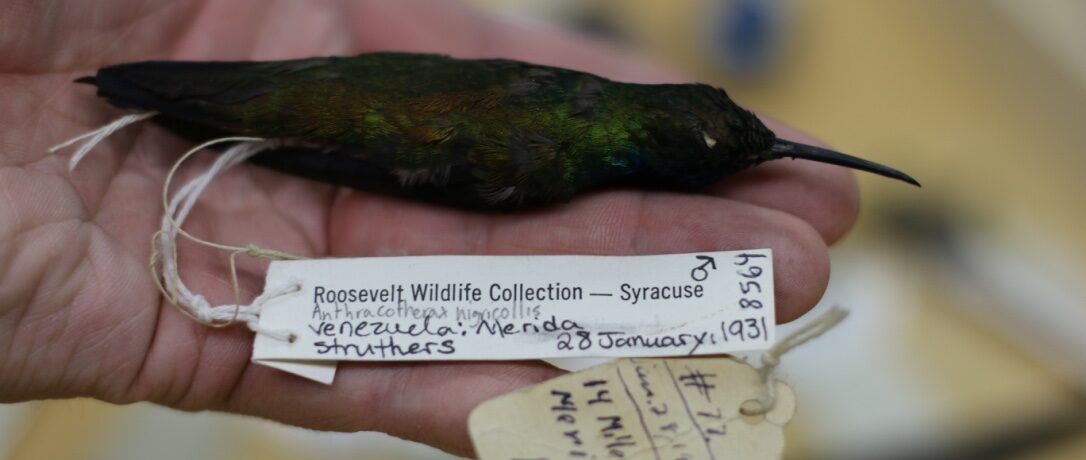
The scientific collections held by the Academy, including more than 19 million specimens of animals, plants, and minerals, constitute an irreplaceable resource to the national and international community. These collections are essential for addressing the most pressing challenges of the 21st century, from tracking the impacts of climate change and protecting biodiversity to ensuring public health and food security.
The Academy’s holdings are of unparalleled historical and scientific significance in American natural history. Among the most notable historic collections under its care are Thomas Jefferson’s fossil collection, the Lewis and Clark Herbarium, and the Titian Peale Moth and Butterfly Collection. However, the full list of contributors to these collections includes all the notable naturalists and thinkers who developed America’s independence in biological research. The collection is, therefore, an essential resource in documenting and understanding this dynamic period in the history of our country. The Academy also contains some of the largest and most comprehensive collections of birds, mollusks, freshwater fish, and aquatic microorganisms anywhere in the world.
Critical for the stewardship of these collections are the curatorial staff who care for them. The curators of these collections, experts in their respective fields, have been the recipients of numerous competitive grants from the National Science Foundation. The collections bring researchers to Philadelphia from around the world. The expert staff train dozens of students in the fundamentals of biodiversity research. Specimens and their associated data have been used in hundreds of scientific publications, but also in exhibits and public programs.
Scientific collections are not static archives; they are active, dynamic tools for discovery. Every specimen represents an irreplaceable snapshot of a species at a specific point in time and space. In an era of rapid environmental change and the loss of natural habitats, the Academy’s 214-year-old efforts documenting life on Earth are more relevant today than at any point in its history.
The NSC Alliance maintains that the stewardship of such an invaluable resource requires a commitment to expert long-term care as well as accessibility to the global research community. Any administrative or structural changes at the Academy must prioritize the integrity of these collections. The destabilization of the institutional support or the specialist staff required to maintain these specimens for active use in research would represent an immense loss to the city of Philadelphia, the state of Pennsylvania, and the global scientific community.
We urge the executive staff and Board of Drexel University and the Academy of Natural Sciences to find a resolution that ensures a sustainable future for these vital resources and associated museum-based expertise. We encourage decision-makers to consult available experts and resources, including professional societies such as the NSC Alliance, as the discussion moves forward. We remain hopeful for an outcome that honors the Academy’s scientific and public education mission and plans for the stability needed to continue institutional excellence. The Academy is a shared treasure, serving as a foundational record of our planet’s history and a key to its future.
About the Natural Science Collections Alliance
The Natural Science Collections Alliance is a non-profit association that supports natural science collections, their human resources, the institutions that house them, and their research activities for the benefit of science and society. Our membership consists of institutions that are part of an international network of museums, botanical gardens, herbaria, universities, and other institutions that contain natural science collections and use them in research, exhibitions, academic and informal science education, and outreach activities.